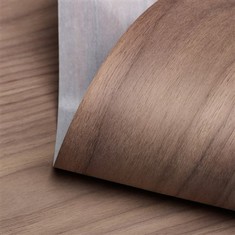
Woven Veneer
Description
Technical Parameters
Chongqing Qianrun New Material Technology Co., Ltd. is a company engaged in new material technology research and development, technical services, technology development and other businesses. The company's main products: Melamine wood door, decorative panel, door skin, engineered veneer and other products.
Rich Product Range
Our company can produce graphite waterproofing sheets, graphite door panel laminates, graphite high density molded door panels, melamine molded door skins, melamine door skins, wooden door panels, plywood door skins and more.
Leading Service
We have many years of industry experience and a complete production management, quality supervision, sales service operation system. Whether you are looking to purchase graphite flashing or wooden door panels, just email your requirements and we can customize the product for you.
Quality Guaranteed
The sapphire health-care door skin exclusively developed by our company meets the environmental protection standard of the wooden door industry - enf level, and the formaldehyde emission is far lower than E0 level and E1 level.
Customizable
All our products can be OEM/ODM customized. Whether it's intricate patterns, beveled edges or unique sizes; our processing capabilities allow us to create custom designs and customize our products.

Edgebanding veneer is a thin strip of real wood veneer used to cover and enhance the exposed edges of plywood, MDF, or particleboard. It provides a polished and seamless finish, concealing the raw edges of the substrate material while adding durability and aesthetic appeal. Edgebanding veneer comes in various wood species, grains, and finishes, allowing for versatile applications that match different furniture designs and styles.

Our Inner Decoration Skin Veneer is engineered for longevity. They are treated with advanced coatings that provide excellent resistance against scratches, stains, and moisture, ensuring that your doors maintain their pristine appearance for years to come. The veneer skins are also lightweight, making them easy to handle and install, saving both time and effort during the construction or renovation process.

Burr veneer, renowned for its exquisite and intricate patterns, is a type of wood veneer derived from burl wood. Burl wood is a growth on a tree that results from various factors, such as stress, injury, or fungus, leading to the formation of unique, swirling grain patterns within the wood. Burr veneer is meticulously crafted by slicing these burls into thin sheets, showcasing the mesmerizing and highly prized swirling designs.

Ash burl veneer is a highly coveted and visually stunning wood veneer derived from the burls of ash trees. Burls are abnormal growths on the tree, resulting in intricate and swirling patterns within the wood. Ash burl veneer is created by skillfully slicing these burls into thin sheets, preserving the natural, mesmerizing designs.

Mapa burl veneer is a luxurious and rare wood veneer harvested from the burls of Mapa trees. Burls are unique growths on the tree, resulting in intricate and captivating patterns within the wood. Mapa burl veneer is meticulously sliced into thin sheets, preserving the natural swirling designs and creating a visually stunning surface.

Burl wood veneer sheets are thin slices of burl wood, a type of wood that grows on the trunk or branches of a tree as a rounded outgrowth. The burl is prized for its unique figure and patterns, which result from the irregular and knotted growth of the wood. These patterns create a distinctive aesthetic appeal that is highly sought after in furniture and decorative applications.

Elm burl veneer is a luxurious and highly sought-after wood veneer renowned for its exquisite and intricate grain patterns. Sourced from the burls of elm trees, this veneer showcases the natural beauty of the wood, featuring swirling and mesmerizing designs that captivate the eye. Elm burl veneer is meticulously crafted by slicing these burls into thin sheets, preserving the unique and irregular patterns that make each piece one-of-a-kind.

Large burl veneer sheets offer a unique and exquisite solution for interior designers and woodworking enthusiasts looking to add a touch of natural beauty and sophistication to their projects. These sheets are crafted from the finest burls, showcasing intricate and captivating grain patterns that are truly one-of-a-kind.

Redwood burl veneer is a highly prized and visually striking wood veneer sourced from the burls of redwood trees, renowned for their exceptional beauty and rarity. These veneer sheets showcase the unique swirling and intricate patterns inherent to redwood burls, making each piece a natural work of art.
What Is Woven Veneer
Woven veneer is a specialized type of wood veneer where thin strips of wood are woven together to create a decorative and structural panel. This technique involves cutting the wood into long, narrow strips and then weaving them in a similar fashion to basket weaving or textile weaving. The resulting pattern can be intricate and visually appealing, often used in furniture making, cabinetry, and interior design to add texture and visual interest.
Features of Woven Veneer
Intricate Patterns
The most striking feature of woven veneer is its complex, textured patterns, which are achieved through the careful interlacing of wooden strips. These patterns can range from simple geometric designs to elaborate, custom creations.
Strength and Durability
The woven structure of the veneer provides increased strength and stability to the material. The interlocking of the wood fibers enhances the panel's ability to resist warping and cracking, making it suitable for applications that require durability.
Lightweight
Despite its strength, woven veneer remains relatively lightweight. This characteristic is particularly beneficial in furniture and architectural applications where reducing the overall weight is desirable without compromising on strength.
Versatility
Woven veneer can be applied to various surfaces and integrated into different design schemes. It can be used as a standalone material or layered with other materials to create composites with unique properties.
Raw Wood Veneer
Raw veneer is veneer that has no backing on it, so it can be used on either side as they look the same until you apply a finish. In the slicing process one side of the veneer is compressed the other stretched, so they can accept stain differently. Mostly made from hardwood trees, it's very durable and can be used on flat as well as curved surfaces and the grain isn't matched during manufacture. This means that if you want to create a specific finish, it might be better to choose a different type of veneer.
Laid-Up Veneer
Laid-up veneer is pieces of raw veneer attached together to create larger pieces. This is a good option as it can be manufactured to your specific size, design, and shape – but it is a lengthy process to create.
Backed Wood Veneer
Backed veneer uses another material – paper, phenolic, cloth and foil are common backings – to make it stronger and more versatile. The second material is attached to one side of the veneer and the grains in the panels are usually matched during manufacture. They can be applied to flat or curved surfaces as it is more flexible than raw wood veneer and less likely to crack.
Laminated or Reconstituted Veneer
Typically made from fast-growing species, reconstituted veneer consists of several slices of wood laminated together. The resulting block of wood is then sliced in the opposite direction from the initial slices so that its edges become the grain of the reconstituted veneer. The result is a very flexible veneer that can be shaped and bent.
How to Choose Woven Veneer
Project Requirements
Determine the purpose of the woven veneer. Consider if it's for indoor or outdoor use, the level of durability needed, and any structural support requirements.
Design Aesthetic
Assess the style of the project. Woven veneer is available in various patterns, colors, and finishes. Select a design that complements the overall design scheme and enhances the desired ambiance.
Wood Species
The type of wood used in the veneer affects its appearance, durability, and workability. Choose a species that suits the application and meets the performance criteria, such as resistance to moisture, UV light, or impact.
Quality
Inspect the quality of the veneer closely. Look for uniformity in the weave, consistency of color, and absence of defects like knots, splits, or gaps. High-quality veneer will provide a more refined and professional finish.
Manufacturing Process
Understand how the veneer is manufactured. Handwoven veneer may offer a more artisanal look, while machine-woven veneer can provide greater consistency at a lower cost.
Finish
Consider the type of finish desired. Woven veneer can be stained, varnished, or treated with other finishes to protect it and enhance its appearance. The finish should be appropriate for the intended use and harmonize with the surrounding materials.
Environmental Impact
If sustainability is a concern, opt for veneers made from legally harvested and certified wood sources. Look for suppliers that practice responsible forestry and have certifications like FSC (Forest Stewardship Council).
Budget
Set a budget that accommodates the cost of high-quality woven veneer. While it may be tempting to choose a less expensive option, remember that the unique qualities of woven veneer come at a higher price point.
Process of Woven Veneer
Selecting Wood
Choose different types of wood with contrasting colors and grain patterns to create visual interest in the woven design.
Preparing the Veneer Strips
Cut the wood into thin strips using a bandsaw, table saw, or veneer saw. The thickness of the strips typically ranges from 1/16 to 1/8 inch. Sand the strips to ensure they are smooth and free of imperfections.
Designing the Pattern
Decide on the pattern you want to create. Common patterns include checkerboard, herringbone, and basketweave. Sketch out the design on paper to plan the arrangement of the veneer strips.
Weaving the Veneer
Start by laying out the first set of veneer strips parallel to each other on a flat surface. Weave the second set of strips perpendicular to the first set, going over and under the strips in the first layer to create the woven pattern. Continue weaving the strips until the desired size of the woven veneer panel is achieved.
Gluing the Veneer
Apply wood glue to the back of the woven veneer panel to secure the strips in place. Use a veneer press or clamps to apply pressure evenly across the panel while the glue dries. This helps ensure a strong bond between the strips.
Trimming and Finishing
Once the glue has dried, trim the edges of the woven veneer panel to create clean, straight lines. Sand the surface of the panel to smooth out any rough edges or uneven surfaces. Apply a finish such as varnish or polyurethane to protect the wood and enhance its appearance.
Optional Steps
After the finish has dried, you can further sand the surface to achieve a smooth and polished look. The woven veneer panel can be incorporated into various woodworking projects such as furniture, decorative panels, or art pieces.
Dust Regularly
Periodically wipe the surface of the woven veneer with a soft, dry cloth or feather duster to remove any loose dirt, dust or debris. This prevents particles from sinking into the crevices of the fabric and scratching the surface.
Gentle Cleansing
If the veneer becomes dirty or soiled, lightly dampen a soft cloth with water and gently wipe the surface in the direction of the grain. Avoid using harsh cleaning solutions or abrasive materials as they can damage the veneer or peel off its finish.
Avoid Moisture
Woven veneer is sensitive to humidity and changes in moisture levels, which can cause the wood to swell, warp, or delaminate. Place furniture or objects containing woven veneer in a stable environment away from direct sunlight, heat sources and areas of high humidity.
Use Protective Coasters and Mats
To protect against water rings, stains, and scratches, use coasters, placemats, or felt pads under items such as cups, glasses, vases, and decorative objects that are placed on the surface of the woven veneer.
Handle With Care
When moving or carrying furniture or objects with woven veneers, lift and carry them rather than dragging or sliding them across the surface. This helps prevent accidental damage to the veneer slats or seams.
Periodic Inspection
Regularly inspect the woven veneer for any signs of damage, such as loose or lifted strips, cracks, or discoloration. Address any issues promptly to prevent the situation from getting worse.
Certificate


Frequently Asked Questions
Q: What is woven veneer?
Q: How is woven veneer made?
Q: What are the common patterns found in woven veneer?
Q: What are the advantages of using woven veneer?
Q: Can woven veneer be used outdoors?
Q: How should woven veneer be cared for?
Q: Is woven veneer eco-friendly?
Q: How is woven veneer applied?
Q: What are the limitations of woven veneer?
Q: Can woven veneer be repaired if damaged?
Q: What trends are emerging in woven veneer design?
Q: Where can woven veneer be purchased?
Q: How is woven veneer priced?
Q: Can woven veneer be customized?
Q: What types of projects are well-suited for woven veneer?
Q: How does woven veneer compare to other wood veneer types?
Q: What are the challenges associated with working with woven veneer?
Q: How can I incorporate woven veneer into my home decor?
Q: What is the future of woven veneer in design?
Q: Are there any alternatives to woven veneer?
Hot Tags: woven veneer, China woven veneer manufacturers, factory
Previous
Woven VeneerNext
Ash Burl VeneerSend Inquiry